
MOLD & MYCOTOXINS
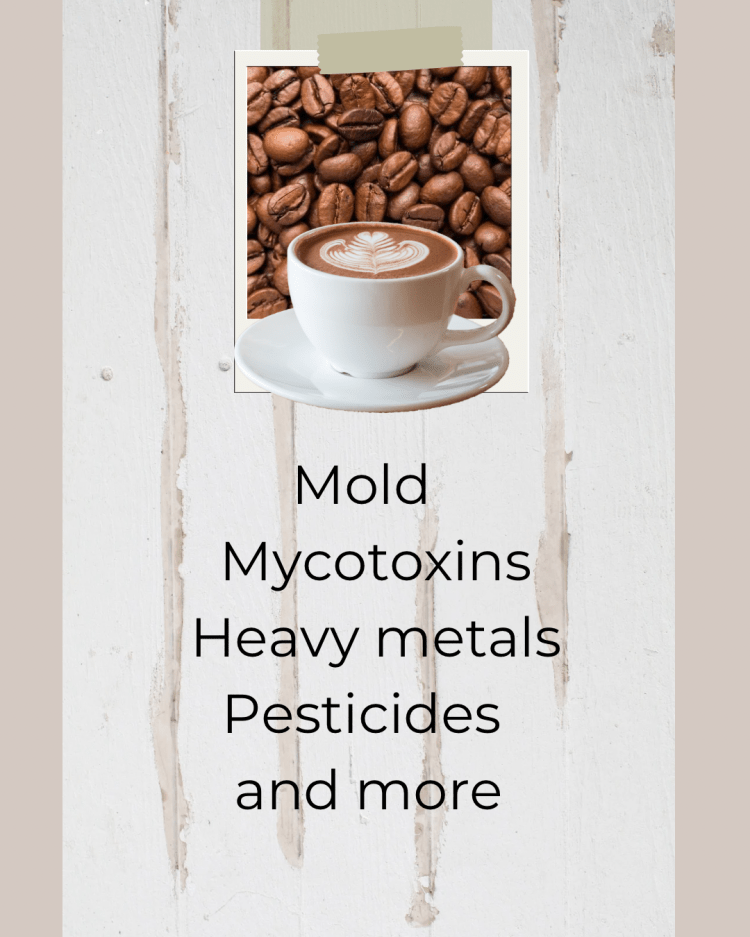
Most coffee crops are raised in tropical climates. Mold species vary by climate and the type of food source available.
The warmer and wetter the climate, the greater the variety of mold type and mold growth.
Because coffee crops are tropical, they are exceedingly susceptible to mold growth and subsequently, mycotoxins.
In the coffee production process there is lots of water that’s used to clean coffee. If it isn’t dried properly, mold takes root.
Storage methods contribute to mold growth and mycotoxin formation also.
Most coffee beans are stored for long periods of time in hot, damp conditions.
Types of Mycotoxins
Ochratoxin A (OTA) in Coffee
Ochratoxin A is classified as a possible carcinogen by the US Government and categorized as a mycotoxin.
It causes oxidative stress in the body, which impairs mitochondrial function, and disrupts protein synthesis. This can lead to a variety of symptoms like memory problems, brain fog, Chronic Fatigue Syndrome, night sweats, dizziness, and even hair loss.
РАН: Polycyclic Aromatic Hydrocarbons
Another health-harming toxin to look out for in your morning brew is Polycyclic Aromatic Hydrocarbons (also know as PAHs).
So what is the problem with PAHs?
They’re why health experts recommend you limit the amount of charred foods you consume – PAHs are classified as probable carcinogens
Yeast in Coffee
Yeast is commonly associated with bread, but it is actually a key player in many fermentation processes, including wine, beer, chocolate, and coffee.
For chocolate and coffee in particular, it is believed that yeast strains play a critical role in the creating a bean’s distinctive taste and smell.
Though yeast is part of the fermentation process, there shouldn’t be high levels of it your morning cup.
Pesticides in Coffee
Only 3% of coffee available worldwide today are grown using organic methods, which means 97% are treated with pesticides and other chemicals.
Coffee is largely grown in developing countries like Colombia, Brazil, and Ethiopia, many of which have few to no regulations on the use of pesticides and chemicals on food products. In fact, some actually use chemicals to treat coffee that have been banned in the US and Europe.
What you should look for when buying coffee?

Select an organic coffee.
Pick arabica beans over robusta beans. Though robusta varieties do have higher levels of caffeine, they also contain more mycotoxins.
Because mold is less apt to grow at higher elevations, purchasing coffee that has been harvested in the mountains is a great way to decrease the amount in your coffee.
Stay away from blends. There is no way of telling where the different bean varieties have come from.
Do not drink decaffeinated coffee. Caffeine actually protects coffee beans from the growth of mold & can prevent massive amounts of mycotoxins from growing.
Steam is an agent that can help break down toxins, so if all else fails, order an Americano or Cappuccino.

 mothernaturesroots.com